Rear Brake Fluid Leaking

Archived posts from the ANZ Honda 600 Owners Yahoo Group
Mega
Posts: 0
Joined: Mon Jun 07, 2010 4:25 am

Re: Rear Brake Fluid Leaking

Post by Mega »

I've also heard silicone break fluid is great on older cars that don't have ABS. It also won't destroy paint like regular fluid.
Just curious: Are replacement cylinders not possible to find anymore? What about taking you brake cylinders to a professional rebuilder? Would they have better tools and parts for a rebuild?
I haven't had brake problems on my coupe yet(knock and wood), but I recently started driving it more regularly. It was in storage with the previous owners for a long time and I wouldn't be surprised if I get a little fluid leak some time this summer.
Although on a Honda 600, the brakes don't really have to do a whole lot of work. The car barely weighs over 1000 pounds, if that.
--- In
anzhonda600owners@yahoogroups.com
, "Lyle" wrote:
> Hi Marty, yep, like Dale said it's a big concern. Not just loosing rear brake pressure, but the brake fluid will get on the rear shoes and destroy them also.
> If the bores are OK then a light hone will work. If they are bad the cylinder will have to be replaced or sleeved.
> Bill knows of a place that sleeves them.
> If the bores are good and 3/4" dia then I have NOS pistons and seals if you need them, cheap.
> Also, switch to silicone brake fluid, see "Files" Bill has a good artical about it. I run it in all my old cars.
> Lyle
> --- In
anzhonda600owners@yahoogroups.com
, goinhm@ wrote:
> > Hi Marty,
> > Your rear brake problem is a definite concern. If you suspect the
> > brake cylinders on rear brakes are about the same age, you want to take them
> > both off, take them apart, and inspect them. You want to do an inspection
> > which involves removing the two pistons contained in each piston cylinder.
> > The dust cover (the black "rubber" part you see on the outside) is the
> > least important but it does need to be without holes, rips, or tears. When
> > you remove the piston, you will see the very important seal on the piston
> > ....... this is where your leaking is occurring. You can also inspect the
> > piston cylinder bores which should be very clean, smooth, and shiny looking
> > in the area where the piston moves. Measure the bore to see if is still
> > within spec.
> > Now for the best part ....... you can still get parts for this brake
> > item. Miles sells a rear brake rebuild kit and I think Mike O'Connor does,
> > too. Also, if the cylinder says 3/4 inches, it uses the same rebuild kit
> > as the 1973 Honda Civic. Check with Lyle ...... he had some brake repair
> > parts he was selling a year ago.
> > Also, I think Miles may have posted some YouTube videos about the
> > rear brake cylinder. The biggest problems I have seen with the rear brake
> > cylinders are;
> > 1. the brake fluid has crystallized and it forms little particles which
> > feel like sand which has been made of rubber cement.
> > 2. the seal is no longer pliable enough to seal off the bore
> > 3. the piston bores become excessively pitted and/or corroded.
> > good luck,
> > Dale
> > Thanks guys,
> > Again, I only see a bit of fluid that is leaking from the seal. When the
> > wheel was off I did step on the the brakes to see if the pistons would move.
> > They did move but not at the same time. It seemed that the top one
> > (right) engaged first, followed by the other (bottom).
> > I probably know the answer to this question because it is regarding the
> > brake system, but how serious is this? Can I get away with driving on it
> > lightly or is it a "do not get behind the wheel" situation.
> > Thanks
> > Marty
blake neilson
Posts: 0
Joined: Fri Mar 07, 2008 10:32 am

Re: Rear Brake Fluid Leaking

Post by blake neilson »

Some swear by silicone brake fluid some swear at the stuff.  You are right, it doesn't remove paint, that's why Harley Davidson uses it. No worries when/if it is spilled from the front master cylinder, located about a foot above the painted fuel tank.
Back when my 600 was regular transportation for me I was told that I could not rebuild an aluminum wheel cylinder successfully.  The advice I got was to the effect that using the conventional brake cylinder hone would ruin the cylinder.  So I tried scotchbrite instead.  It worked, so I think the secret is to be very gentle when refinishing the insides of the wheel cylinder. If you try this and it still leaks then you have no choice but to go to a shop that can sleeve the cylinder.  A very common procedure in the old car biz.
The 600 weighs about 1300-1400 lbs. Considering the weight distribution, the front brakes probably do 60-70% of the work. You could probably stop okay without the rear brakes working at all but in a panic situation you will more likely lock the front wheels and of course loose steering. Yes the Honda 600 doesn't weigh much but the brakes are tiny and so relatively speaking they work pretty hard. If you doubt that just try opening the door and stopping the car like Fed Flintstone.
Blake From:
Mega To:
anzhonda600owners@yahoogroups.com Sent:
Fri, April 22, 2011 12:31:20 AM Subject:
[anzhonda600owners] Re: Rear Brake Fluid Leaking
I've also heard silicone break fluid is great on older cars that don't have ABS. It also won't destroy paint like regular fluid.
Just curious: Are replacement cylinders not possible to find anymore? What about taking you brake cylinders to a professional rebuilder? Would they have better tools and parts for a rebuild?
I haven't had brake problems on my coupe yet(knock and wood), but I recently started driving it more regularly. It was in storage with the previous owners for a long time and I wouldn't be surprised if I get a little fluid leak some time this summer.
Although on a Honda 600, the brakes don't really have to do a whole lot of work. The car barely weighs over 1000 pounds, if that.
--- In
anzhonda600owners@yahoogroups.com
, "Lyle" wrote:
> Hi Marty, yep, like Dale said it's a big concern. Not just loosing rear brake pressure, but the brake fluid will get on the rear shoes and destroy them also.
> If the bores are OK then a light hone will work. If they are bad the cylinder will have to be replaced or sleeved.
> Bill knows of a place that sleeves them.
> If the bores are good and 3/4" dia then I have NOS pistons and seals if you need them, cheap.
> Also, switch to silicone brake fluid, see "Files" Bill has a good artical about it. I run it in all my old cars.
> Lyle
> --- In
anzhonda600owners@yahoogroups.com
, goinhm@ wrote:
> > Hi Marty,
> > Your rear brake problem is a definite concern. If you suspect the
> > brake cylinders on rear brakes are about the same age, you want to take them
> > both off, take them apart, and inspect them. You want to do an inspection
> > which involves removing the two pistons contained in each piston cylinder.
> > The dust cover (the black "rubber" part you see on the outside) is the
> > least important but it does need to be without holes, rips, or tears. When
> > you remove the piston, you will see the very important seal on the piston
> > ....... this is where your leaking is occurring. You can also inspect the
> > piston cylinder bores which should be very clean, smooth, and shiny looking
> > in the area where the piston moves. Measure the bore to see if is still
> > within spec.
> > Now for the best part ....... you can still get parts for this brake
> > item. Miles sells a rear brake rebuild kit and I think Mike O'Connor does,
> > too. Also, if the cylinder says 3/4 inches, it uses the same rebuild kit
> > as the 1973 Honda Civic. Check with Lyle ...... he had some brake repair
> > parts he was selling a year ago.
> > Also, I think Miles may have posted some YouTube videos about the
> > rear brake cylinder. The biggest problems I have seen with the rear brake
> > cylinders are;
> > 1. the brake fluid has crystallized and it forms little particles which
> > feel like sand which has been made of rubber cement.
> > 2. the seal is no longer pliable enough to seal off the bore
> > 3. the piston bores become excessively pitted and/or corroded.
> > good luck,
> > Dale
> > Thanks guys,
> > Again, I only see a bit of fluid that is leaking from the seal. When the
> > wheel was off I did step on the the brakes to see if the pistons would move.
> > They did move but not at the same time. It seemed that the top one
> > (right) engaged first, followed by the other (bottom).
> > I probably know the answer to this question because it is regarding the
> > brake system, but how serious is this? Can I get away with driving on it
> > lightly or is it a "do not get behind the wheel" situation.
> > Thanks
> > Marty
mterrens
Posts: 2
Joined: Sat Jan 22, 2005 10:36 am

Re: Rear Brake Fluid Leaking

Post by mterrens »


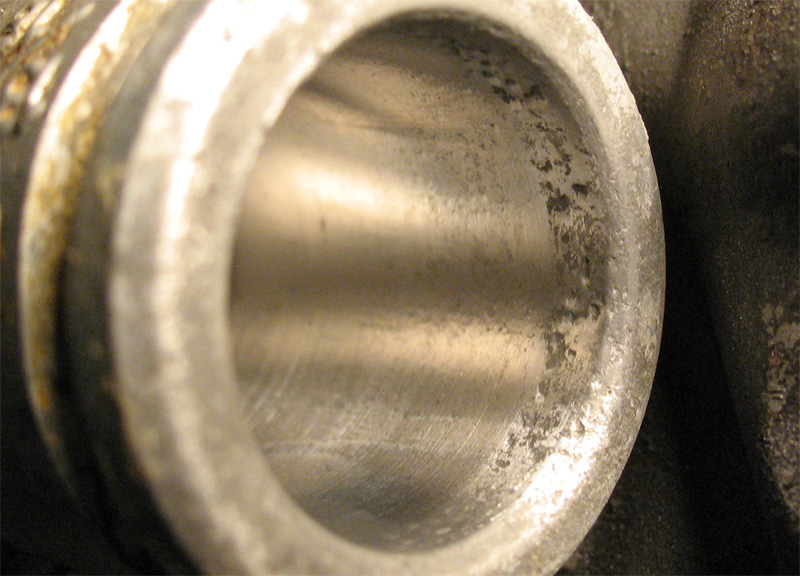
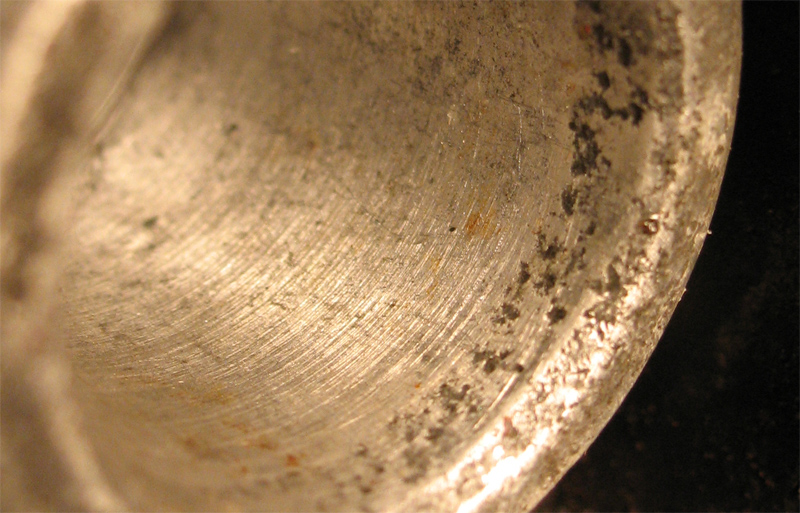
Yes, honing an aluminum cylinder, at least in my limited experience, is problematic.  See this picture of the aftermath of my attempt to do this.
http://www.mysubaru360.com/club/honing_result.jpg
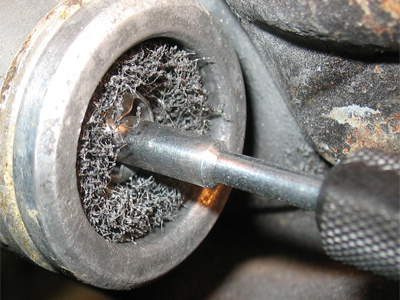
I eventually used a Dremel 511E buffer attachment, which seemed to work well.  See this pic...
http://www.mysubaru360.com/club/ dremel_511E_2.jpg and this one http://www.mysubaru360.com/club/ dremel_511E_1.jpg
Steve
> ----- Original Message -----
> From:
> blake
> neilson
> To:
> anzhonda600owners@yahoogroups.com
> Sent:
> Friday, April 22, 2011 9:27
> AM
> Subject:
> Re: [anzhonda600owners] Re: Rear
> Brake Fluid Leaking
> Some swear by silicone brake fluid some swear at the stuff.  You are > right, it doesn't remove paint, that's why Harley Davidson uses it. No worries > when/if it is spilled from the front master cylinder, located about a foot > above the painted fuel tank.
> Back when my 600 was regular transportation for me I was told that I > could not rebuild an aluminum wheel cylinder successfully.  The advice I > got was to the effect that using the conventional brake cylinder hone would > ruin the cylinder.  So I tried scotchbrite instead.  It worked, so I > think the secret is to be very gentle when refinishing the insides of the > wheel cylinder. If you try this and it still leaks then you have no choice but > to go to a shop that can sleeve the cylinder.  A very common procedure in > the old car biz.
> The 600 weighs about 1300-1400 lbs. Considering the weight distribution, > the front brakes probably do 60-70% of the work. You could probably stop okay > without the rear brakes working at all but in a panic situation you will more > likely lock the front wheels and of course loose steering. Yes the Honda 600 > doesn't weigh much but the brakes are tiny and so relatively speaking they > work pretty hard. If you doubt that just try opening the door and stopping the > car like Fed Flintstone.
> Blake
> From:
> Mega
>
> To:
> anzhonda600owners@yahoogroups.com
> Sent:
> Fri, April 22, 2011 12:31:20
> AM
> Subject:
> [anzhonda600owners] Re: Rear Brake Fluid
> Leaking
> I've also heard silicone break fluid is great on older cars that don't have > ABS. It also won't destroy paint like regular fluid.
> Just curious: Are
> replacement cylinders not possible to find anymore? What about taking you > brake cylinders to a professional rebuilder? Would they have better tools and > parts for a rebuild?
> I haven't had brake problems on my coupe yet(knock
> and wood), but I recently started driving it more regularly. It was in storage > with the previous owners for a long time and I wouldn't be surprised if I get > a little fluid leak some time this summer.
> Although on a Honda 600, the
> brakes don't really have to do a whole lot of work. The car barely weighs over > 1000 pounds, if that.
> --- In
> anzhonda600owners@yahoogroups.com
> ,
> "Lyle" wrote:
> > Hi Marty, yep, like Dale
> said it's a big concern. Not just loosing rear brake pressure, but the brake > fluid will get on the rear shoes and destroy them also.
> > If the bores
> are OK then a light hone will work. If they are bad the cylinder will have to > be replaced or sleeved.
> > Bill knows of a place that sleeves
> them.
> > If the bores are good and 3/4" dia then I have NOS pistons and > seals if you need them, cheap.
> > Also, switch to silicone brake fluid,
> see "Files" Bill has a good artical about it. I run it in all my old > cars.
> > Lyle
> > --- In
> anzhonda600owners@yahoogroups.com
> ,
> goinhm@ wrote:
> > > Hi Marty,
> Your rear brake problem is a definite concern. If you suspect the
> > brake cylinders on rear brakes are about the same age, you want to take > them > > > both off, take them apart, and inspect them. You want to do > an inspection > > > which involves removing the two pistons contained > in each piston cylinder.
> > > The dust cover (the black "rubber" part
> you see on the outside) is the
> > > least important but it does need
> to be without holes, rips, or tears. When
> > > you remove the piston,
> you will see the very important seal on the piston
> > > ....... this
> is where your leaking is occurring. You can also inspect the
> piston cylinder bores which should be very clean, smooth, and shiny looking
> > > in the area where the piston moves. Measure the bore to see if > is still > > > within spec.
> > > Now for the
> best part ....... you can still get parts for this brake > > > item.
> Miles sells a rear brake rebuild kit and I think Mike O'Connor does,
> > too. Also, if the cylinder says 3/4 inches, it uses the same rebuild kit
> > > as the 1973 Honda Civic. Check with Lyle ...... he had some > brake repair > > > parts he was selling a year ago.
> > > Also, I think Miles may have posted some YouTube videos about > the > > > rear brake cylinder. The biggest problems I have seen with > the rear brake > > > cylinders are;
> > > 1. the
> brake fluid has crystallized and it forms little particles which
> feel like sand which has been made of rubber cement.
> > 2. the seal is no longer pliable enough to seal off the bore
> > > 3. the piston bores become excessively pitted and/or
> corroded.
> > > good luck,
> > > Dale
> > > Thanks guys,
> > > Again, I only see a bit of fluid that
> is leaking from the seal. When the
> > > wheel was off I did step on
> the the brakes to see if the pistons would move.
> > > They did move
> but not at the same time. It seemed that the top one
> > > (right)
> engaged first, followed by the other (bottom).
> > > I probably know the answer to this question because it is > regarding the > > > brake system, but how serious is this? Can I get > away with driving on it > > > lightly or is it a "do not get behind > the wheel" situation.
> > > Thanks
> > Marty
mterrens
Posts: 2
Joined: Sat Jan 22, 2005 10:36 am

Re: Rear Brake Fluid Leaking

Post by mterrens »


oops bad links posting...
http://www.mysubaru360.com/club/ dremel_511E_2.jpg
http://www.mysubaru360.com/club/ dremel_511E_1.jpg
> ----- Original Message -----
> From:
> Steven
> Michelsen
> To:
> anzhonda600owners@yahoogroups.com
> Sent:
> Friday, April 22, 2011 9:56
> AM
> Subject:
> Re: [anzhonda600owners] Re: Rear
> Brake Fluid Leaking
> �
> Yes, honing an aluminum cylinder, at least in my
> limited experience, is problematic.  See this picture of the aftermath of > my attempt to do this.
> http://www.mysubaru360.com/club/honing_result.jpg
> I eventually used a Dremel 511E buffer attachment, which seemed to work > well.  See this pic...
> http://www.mysubaru360.com/club/
> dremel_511E_2.jpg and
> this one
> http://www.mysubaru360.com/club/
> dremel_511E_1.jpg
> Steve
> > ----- Original Message -----
> > From:
> > blake
> > neilson
> > To:
> > anzhonda600owners@yahoogroups.com
> > Sent:
> > Friday, April 22, 2011 9:27
> > AM
> > Subject:
> > Re: [anzhonda600owners] Re:
> > Rear Brake Fluid Leaking
> > Some swear by silicone brake fluid some swear at the stuff.  You > > are right, it doesn't remove paint, that's why Harley Davidson uses it. No > > worries when/if it is spilled from the front master cylinder, located about > > a foot above the painted fuel tank.
> > Back when my 600 was regular transportation for me I was told that I > > could not rebuild an aluminum wheel cylinder successfully.  The advice > > I got was to the effect that using the conventional brake cylinder hone > > would ruin the cylinder.  So I tried scotchbrite instead.  It > > worked, so I think the secret is to be very gentle when refinishing the > > insides of the wheel cylinder. If you try this and it still leaks then you > > have no choice but to go to a shop that can sleeve the cylinder.  A > > very common procedure in the old car biz.
> > The 600 weighs about 1300-1400 lbs. Considering the weight > > distribution, the front brakes probably do 60-70% of the work. You could > > probably stop okay without the rear brakes working at all but in a panic > > situation you will more likely lock the front wheels and of course loose > > steering. Yes the Honda 600 doesn't weigh much but the brakes are tiny and > > so relatively speaking they work pretty hard. If you doubt that just try > > opening the door and stopping the car like Fed Flintstone.
> > Blake
> > From:
> > Mega
> >
> > To:
> > anzhonda600owners@yahoogroups.com
> > Sent:
> > Fri, April 22, 2011 12:31:20
> > AM
> > Subject:
> > [anzhonda600owners] Re: Rear Brake Fluid
> > Leaking
> > I've also heard silicone break fluid is great on older cars that don't > > have ABS. It also won't destroy paint like regular fluid.
> > Just
> > curious: Are replacement cylinders not possible to find anymore? What about > > taking you brake cylinders to a professional rebuilder? Would they have > > better tools and parts for a rebuild?
> > I haven't had brake problems on
> > my coupe yet(knock and wood), but I recently started driving it more > > regularly. It was in storage with the previous owners for a long time and I > > wouldn't be surprised if I get a little fluid leak some time this > > summer.
> > Although on a Honda 600, the brakes don't really have to do a > > whole lot of work. The car barely weighs over 1000 pounds, if > > that.
> > --- In
> > anzhonda600owners@yahoogroups.com
> > ,
> > "Lyle" wrote:
> > > Hi Marty, yep, like
> > Dale said it's a big concern. Not just loosing rear brake pressure, but the > > brake fluid will get on the rear shoes and destroy them also.
> > > If the
> > bores are OK then a light hone will work. If they are bad the cylinder will > > have to be replaced or sleeved.
> > > Bill knows of a place that sleeves
> > them.
> > > If the bores are good and 3/4" dia then I have NOS pistons and > > seals if you need them, cheap.
> > > Also, switch to silicone brake fluid,
> > see "Files" Bill has a good artical about it. I run it in all my old > > cars.
> > > Lyle
> > > --- In
> > anzhonda600owners@yahoogroups.com
> > ,
> > goinhm@ wrote:
> > > > Hi Marty,
> > > Your rear brake problem is a definite concern. If you suspect the
> > > > brake cylinders on rear brakes are about the same age, you > > want to take them > > > > both off, take them apart, and inspect them.
> > You want to do an inspection
> > > > which involves removing the two
> > pistons contained in each piston cylinder.
> > > > The dust cover (the
> > black "rubber" part you see on the outside) is the
> > > > least
> > important but it does need to be without holes, rips, or tears. When
> > > > you remove the piston, you will see the very important seal on > > the piston > > > > ....... this is where your leaking is occurring.
> > You can also inspect the
> > > > piston cylinder bores which should be
> > very clean, smooth, and shiny looking
> > > > in the area where the
> > piston moves. Measure the bore to see if is still
> > > > within spec.
> > > > Now for the best part ....... you can still get
> > parts for this brake
> > > > item. Miles sells a rear brake rebuild
> > kit and I think Mike O'Connor does,
> > > > too. Also, if the cylinder
> > says 3/4 inches, it uses the same rebuild kit
> > > > as the 1973
> > Honda Civic. Check with Lyle ...... he had some brake repair
> > parts he was selling a year ago.
> > > > Also, I think
> > Miles may have posted some YouTube videos about the
> > > > rear brake
> > cylinder. The biggest problems I have seen with the rear brake
> > cylinders are;
> > > > 1. the brake fluid has
> > crystallized and it forms little particles which
> > > > feel like
> > sand which has been made of rubber cement.
> > > > 2.
> > the seal is no longer pliable enough to seal off the bore
> > > > 3. the piston bores become excessively pitted and/or > > corroded.
> > > > good luck,
> > > > Dale
> > > > Thanks guys,
> > > > Again, I only see a bit of
> > fluid that is leaking from the seal. When the
> > > > wheel was off I
> > did step on the the brakes to see if the pistons would move.
> > They did move but not at the same time. It seemed that the top one
> > > (right) engaged first, followed by the other (bottom).
> > > > I probably know the answer to this question
> > because it is regarding the
> > > > brake system, but how serious is
> > this? Can I get away with driving on it
> > > > lightly or is it a "do
> > not get behind the wheel" situation.
> > > Thanks
> > > > Marty
Lyle
Posts: 41
Joined: Wed Mar 23, 2011 1:15 pm

Re: Rear Brake Fluid Leaking

Post by Lyle »

I use the scotch bright also, works great on aluminum. Use a little mineral spirits, helps keep the aluminum from plugging up the scotch bright.
If you have deep pits it must be sleeved.
The problem with an aluminum cylinder and a steel piston is the 2 metals react when moisture is absorbed by the brake fluid. This causes the piston to rust and the cylinder to oxidize and pit.
I like the silicone fluid, like Mike said it doesnt hurt the paint it wont absorb water as much.
My 1959 triumph has it in the brake and clutch systems.
No problems.
Lyle
--- In
anzhonda600owners@yahoogroups.com
, Steven Michelsen wrote:
> oops bad links posting...
http://www.mysubaru360.com/club/dremel_511E_2.jpg
http://www.mysubaru360.com/club/dremel_511E_1.jpg
> ----- Original Message -----
> From: Steven Michelsen
> To:
anzhonda600owners@yahoogroups.com
> Sent: Friday, April 22, 2011 9:56 AM
> Subject: Re: [anzhonda600owners] Re: Rear Brake Fluid Leaking
> 
> Yes, honing an aluminum cylinder, at least in my limited experience, is problematic. See this picture of the aftermath of my attempt to do this.
http://www.mysubaru360.com/club/honing_result.jpg
I eventually used a Dremel 511E buffer attachment, which seemed to work well. See this pic...
http://www.mysubaru360.com/club/dremel_511E_2.jpg
and this one
http://www.mysubaru360.com/club/dremel_511E_1.jpg
> Steve
> ----- Original Message -----
> From: blake neilson
> To:
anzhonda600owners@yahoogroups.com
> Sent: Friday, April 22, 2011 9:27 AM
> Subject: Re: [anzhonda600owners] Re: Rear Brake Fluid Leaking
> Some swear by silicone brake fluid some swear at the stuff. You are right, it doesn't remove paint, that's why Harley Davidson uses it. No worries when/if it is spilled from the front master cylinder, located about a foot above the painted fuel tank.
> Back when my 600 was regular transportation for me I was told that I could not rebuild an aluminum wheel cylinder successfully. The advice I got was to the effect that using the conventional brake cylinder hone would ruin the cylinder. So I tried scotchbrite instead. It worked, so I think the secret is to be very gentle when refinishing the insides of the wheel cylinder. If you try this and it still leaks then you have no choice but to go to a shop that can sleeve the cylinder. A very common procedure in the old car biz.
> The 600 weighs about 1300-1400 lbs. Considering the weight distribution, the front brakes probably do 60-70% of the work. You could probably stop okay without the rear brakes working at all but in a panic situation you will more likely lock the front wheels and of course loose steering. Yes the Honda 600 doesn't weigh much but the brakes are tiny and so relatively speaking they work pretty hard. If you doubt that just try opening the door and stopping the car like Fed Flintstone.
> Blake
> ----------------------------------------------------------------------------
> From: Mega
> To:
anzhonda600owners@yahoogroups.com
> Sent: Fri, April 22, 2011 12:31:20 AM
> Subject: [anzhonda600owners] Re: Rear Brake Fluid Leaking
> I've also heard silicone break fluid is great on older cars that don't have ABS. It also won't destroy paint like regular fluid.
> Just curious: Are replacement cylinders not possible to find anymore? What about taking you brake cylinders to a professional rebuilder? Would they have better tools and parts for a rebuild?
> I haven't had brake problems on my coupe yet(knock and wood), but I recently started driving it more regularly. It was in storage with the previous owners for a long time and I wouldn't be surprised if I get a little fluid leak some time this summer.
> Although on a Honda 600, the brakes don't really have to do a whole lot of work. The car barely weighs over 1000 pounds, if that.
> --- In
anzhonda600owners@yahoogroups.com
, "Lyle" wrote:
> > Hi Marty, yep, like Dale said it's a big concern. Not just loosing rear brake pressure, but the brake fluid will get on the rear shoes and destroy them also.
> > If the bores are OK then a light hone will work. If they are bad the cylinder will have to be replaced or sleeved.
> > Bill knows of a place that sleeves them.
> > If the bores are good and 3/4" dia then I have NOS pistons and seals if you need them, cheap.
> > Also, switch to silicone brake fluid, see "Files" Bill has a good artical about it. I run it in all my old cars.
> > Lyle
> > --- In
anzhonda600owners@yahoogroups.com
, goinhm@ wrote:
> > > Hi Marty,
> > > Your rear brake problem is a definite concern. If you suspect the
> > > brake cylinders on rear brakes are about the same age, you want to take them
> > > both off, take them apart, and inspect them. You want to do an inspection
> > > which involves removing the two pistons contained in each piston cylinder.
> > > The dust cover (the black "rubber" part you see on the outside) is the
> > > least important but it does need to be without holes, rips, or tears. When
> > > you remove the piston, you will see the very important seal on the piston
> > > ....... this is where your leaking is occurring. You can also inspect the
> > > piston cylinder bores which should be very clean, smooth, and shiny looking
> > > in the area where the piston moves. Measure the bore to see if is still
> > > within spec.
> > > Now for the best part ....... you can still get parts for this brake
> > > item. Miles sells a rear brake rebuild kit and I think Mike O'Connor does,
> > > too. Also, if the cylinder says 3/4 inches, it uses the same rebuild kit
> > > as the 1973 Honda Civic. Check with Lyle ...... he had some brake repair
> > > parts he was selling a year ago.
> > > Also, I think Miles may have posted some YouTube videos about the
> > > rear brake cylinder. The biggest problems I have seen with the rear brake
> > > cylinders are;
> > > 1. the brake fluid has crystallized and it forms little particles which
> > > feel like sand which has been made of rubber cement.
> > > 2. the seal is no longer pliable enough to seal off the bore
> > > 3. the piston bores become excessively pitted and/or corroded.
> > > good luck,
> > > Dale
> > > Thanks guys,
> > > Again, I only see a bit of fluid that is leaking from the seal. When the
> > > wheel was off I did step on the the brakes to see if the pistons would move.
> > > They did move but not at the same time. It seemed that the top one
> > > (right) engaged first, followed by the other (bottom).
> > > I probably know the answer to this question because it is regarding the
> > > brake system, but how serious is this? Can I get away with driving on it
> > > lightly or is it a "do not get behind the wheel" situation.
> > > Thanks
> > > Marty
Post Reply